I’d love to help you create an invitation that truly shines. You’ll want to include five essential elements: the specific date, time, and location; a clear “Black Tie” dress code statement; RSVP details with a firm deadline; any parking or arrival instructions; and your name with contact information. Using formal language like “request the honour of your presence” sets an elegant tone while maintaining warmth. The right paper choice—cream cardstock with subtle embossing—elevates the entire piece, and there’s much more to discover about formatting and wording that’ll make your invitation unforgettable.
Quick Tips
- Clear event date, time, and location must be prominently displayed for guest convenience and planning purposes.
- Dress code line stating “Black Tie” should appear clearly to set appropriate expectations for attendees.
- RSVP details with a specific deadline at least three weeks prior ensures accurate headcount planning.
- Host’s name and contact information enable guests to respond and ask necessary clarification questions easily.
- Special instructions regarding parking or arrival logistics help guests navigate the venue without confusion.
What Every Black Tie Invitation Must Include
When you’re planning a black tie event, your invitation sets the tone for everything that follows, and I want to help you get it just right.
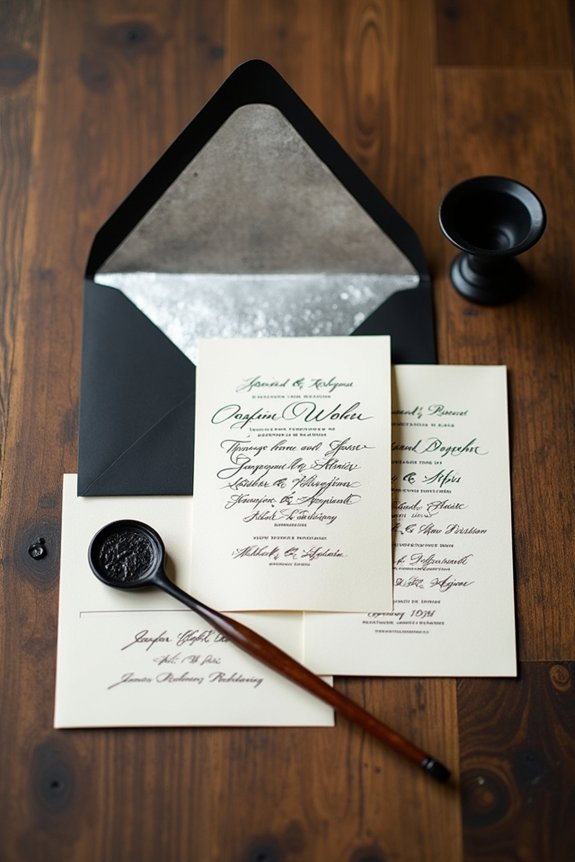
Every black tie invitation needs specific elements to communicate properly. Include the event date, time, and location clearly at the top. Add a dress code line stating “Black Tie” so guests understand expectations.
You’ll want RSVP details with a deadline, plus any special instructions about parking or arrival.
Don’t forget the host’s name and contact information. These components work together to create an invitation that’s both elegant and practical, guiding your guests seamlessly into your celebration.
Wording and Formal Language That Fits the Occasion
Because your invitation’s language shapes how guests perceive your event, I want to guide you toward wording that feels both sophisticated and genuine.
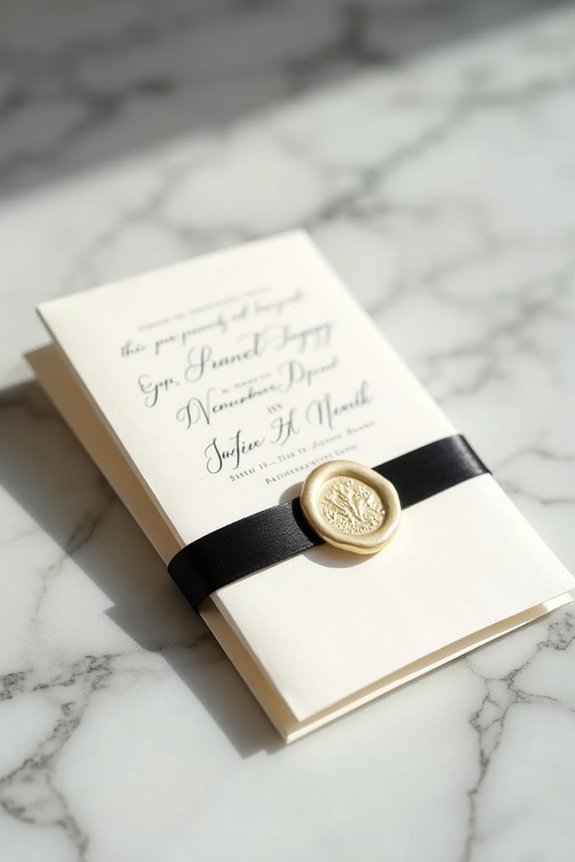
Formal black tie invitations typically use traditional phrases like “request the honour of your presence” or “cordially invite you to.” I recommend choosing language that matches your personal style while maintaining elegance.
Avoid overly stuffy phrasing that feels disconnected from who you are. Clear, classic wording helps guests understand the formality level and dress code expectations.
Your tone should convey respect for the occasion while remaining warm and approachable, making everyone feel genuinely welcomed.
Choosing the Right Paper and Finishes
Your words set the tone, and now the physical invitation itself takes that message further.
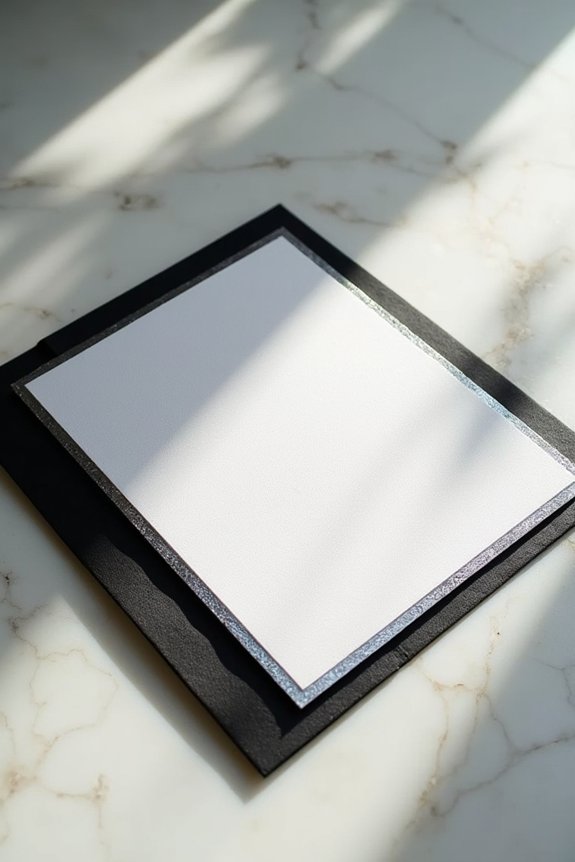
I’d recommend choosing heavyweight cardstock or laid paper—they feel luxurious and communicate elegance before guests even read your message.
Consider a cream, ivory, or white base; these timeless colors feel sophisticated.
Embossing adds subtle texture and refinement without being flashy.
Letterpress creates beautiful depth that guests will notice.
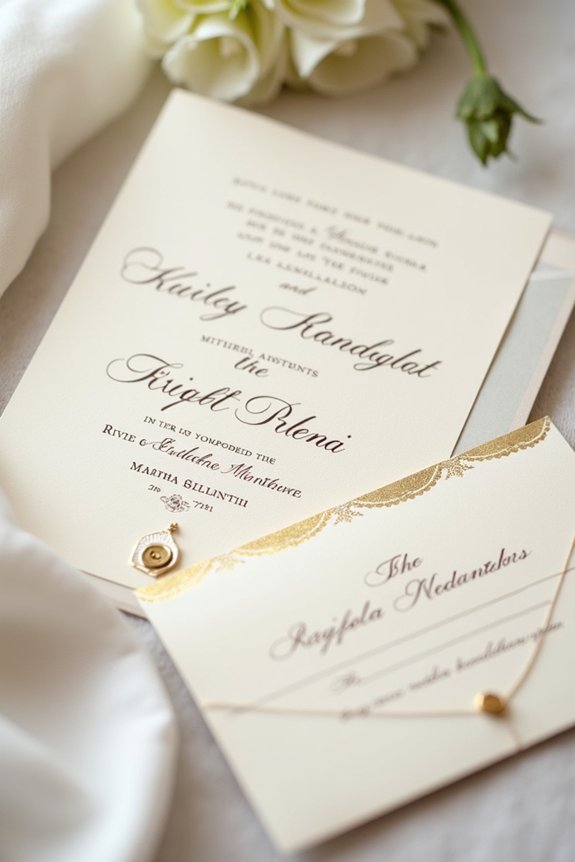
Foil stamping in gold or silver brings understated glamour.
Matte finishes feel more formal than glossy ones.
Pair your invitations with dinner party decorations that echo the same sophistication and formality established through your paper choices.
The paper quality and finish you select should whisper luxury, preparing your guests for the formal evening ahead.
When and How to Request RSVPs
Since your guests need clear guidance on how to respond, I’ll walk you through creating an RSVP system that’s both elegant and practical.
Request responses at least three weeks before your event, giving attendees reasonable time to plan. Include your preferred contact method—phone, email, or a wedding website—making it easy for guests to reply.
Specify a deadline clearly on your invitation, such as “Kindly respond by January 15th.” For black tie events, I’d recommend providing multiple response options since your sophisticated guests appreciate flexibility.
This thoughtful approach guarantees accurate headcounts while maintaining the refined tone your formal celebration deserves.
Formatting Mistakes That Weaken Formality
Now that you’ve nailed down your RSVP system, it’s time to look at how your invitation actually appears on the page—because formatting choices can either elevate or undermine all that formal tone you’re working to create.
Inconsistent fonts, casual spacing, and misaligned text immediately signal that your event isn’t as polished as you intended. I’d suggest using serif fonts for a classic feel, maintaining generous margins, and ensuring consistent alignment throughout.
Avoid decorative elements that clash with black-tie formality. Pay attention to capitalization rules and proper spacing around punctuation. These details matter because they’re what guests notice first, shaping their expectations before they even finish reading.
Frequently Asked Questions
Can I Include a Dress Code Explanation if Guests Aren’t Familiar With Black Tie?
I absolutely recommend including a dress code explanation on your invitation. You can add a subtle note like “Black Tie (formal evening wear)” or include a helpful link to a style guide. It prevents guest confusion and guarantees everyone arrives appropriately dressed.
What’s the Appropriate Timeline for Sending Black Tie Invitations Before the Event?
I recommend sending your black tie invitations 6-8 weeks before your event. This gives guests ample time to arrange formal attire and plan their schedules without feeling rushed or overwhelmed.
How Do I Politely Decline RSVPS From People I Didn’t Invite?
I’d send a gracious note saying you’re honored by their interest, but you’ve finalized your guest list. Thank them for understanding and suggest celebrating together another time.
Should I Include a Wedding Website or Registry Link on the Invitation?
I’d absolutely include your wedding website—it’s basically a lifesaver for your guests! You can skip the registry link on the physical invitation, though; direct people to your website instead where they’ll find everything they need.
Is It Acceptable to Send Black Tie Invitations Digitally Instead of Printed?
I’d recommend against sending black tie invitations digitally. They demand the formality and elegance of printed cards. Digital invites undermine the occasion’s sophistication and won’t convey the dress code’s seriousness to your guests.