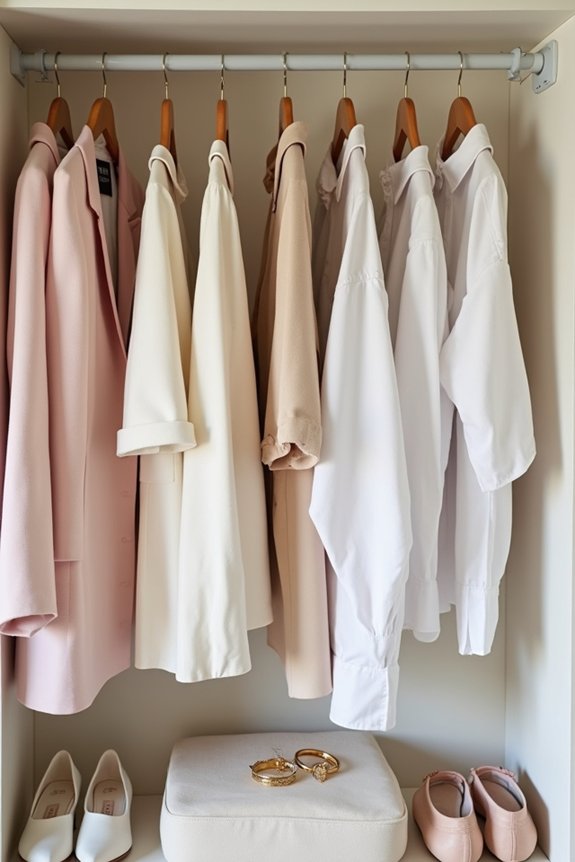
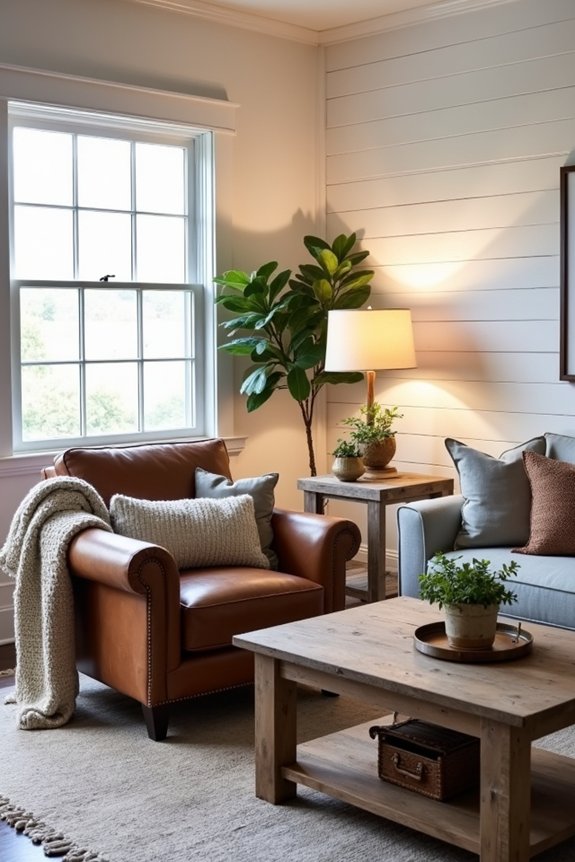
I’ll help you create a cozy farmhouse home by starting with soft neutral walls and natural textures like wood and linen. Then, I’d blend in vintage and reclaimed pieces that tell a story. Keep your color palette muted with creams and sage greens, and layer warm textiles throughout your spaces. Add functional furniture, comfortable seating, and open shelves with warm lighting to showcase what you love. These seven essential ideas work together to build an inviting, authentic atmosphere that’s uniquely yours—and there’s so much more to discover about bringing each element together.
Quick Tips
- Define your personal farmhouse aesthetic by gathering inspiration and identifying preferred colors, materials, and furniture styles that reflect your lifestyle.
- Start with neutral wall colors like soft whites, warm beiges, or gentle grays paired with natural textures for a foundational backdrop.
- Incorporate vintage and reclaimed wood elements such as barn doors and weathered beams to add character and authentic history.
- Maintain a soft, muted color palette with creamy whites and gentle sage greens that complement vintage finds and create harmony.
- Layer warm textiles, throw blankets, and cozy area rugs to create inviting spaces that enhance comfort and farmhouse charm.
Define Your Farmhouse Aesthetic
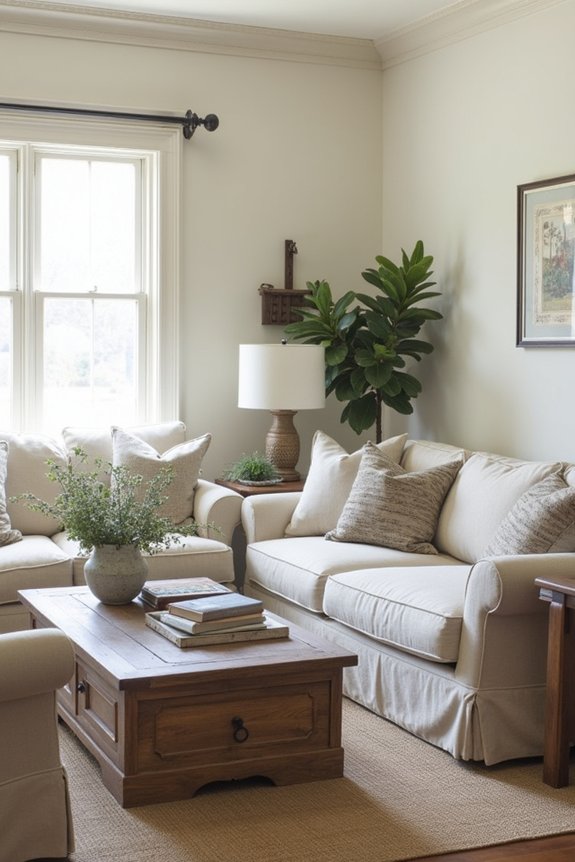
The farmhouse style you’re drawn to might look different from your neighbor’s, and that’s exactly what makes it so special.
I want you to explore what farmhouse means to you personally. Do you prefer modern farmhouse with clean lines, or traditional farmhouse with rustic textures?
Consider gathering inspiration from sources you love—magazines, social media, home décor sites. Notice colors, materials, and furniture styles that speak to your heart.
Think about the feeling you want your home to evoke: cozy, bright, sophisticated, or welcoming.
Your unique farmhouse aesthetic should reflect your personality and lifestyle.
Begin With Neutral Walls and Natural Textures
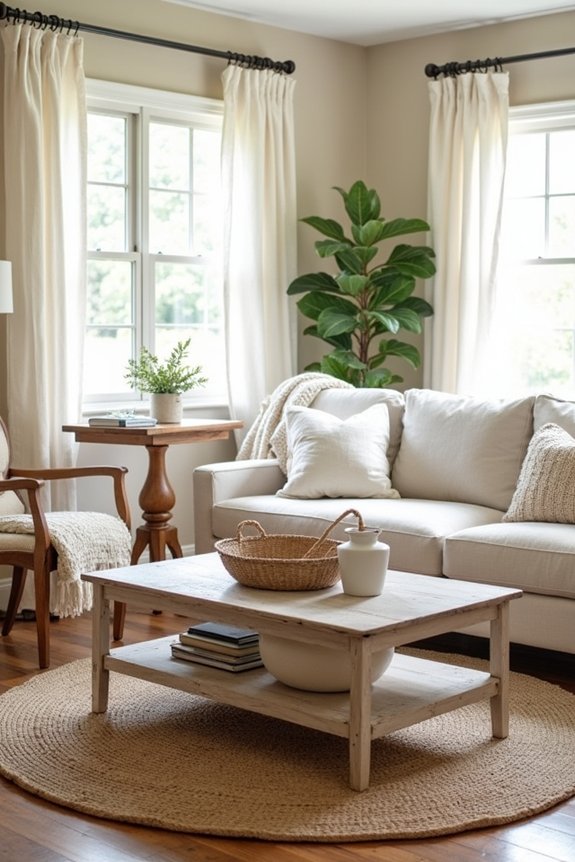
Neutral walls and natural textures form the foundation of farmhouse design, and they’re your secret to creating a space that feels both timeless and uniquely yours.
I’d recommend choosing soft whites, warm beiges, or gentle grays as your base. These colors provide the perfect canvas for layering textures like wood, linen, and wool.
When you incorporate natural materials—reclaimed wood beams, exposed brick, or woven baskets—you’re building warmth and character without overwhelming the eye.
The beauty lies in simplicity; these foundational choices allow your personality to shine through while maintaining that inviting, relaxed farmhouse feeling you’re after.
Mix In Vintage and Reclaimed Wood
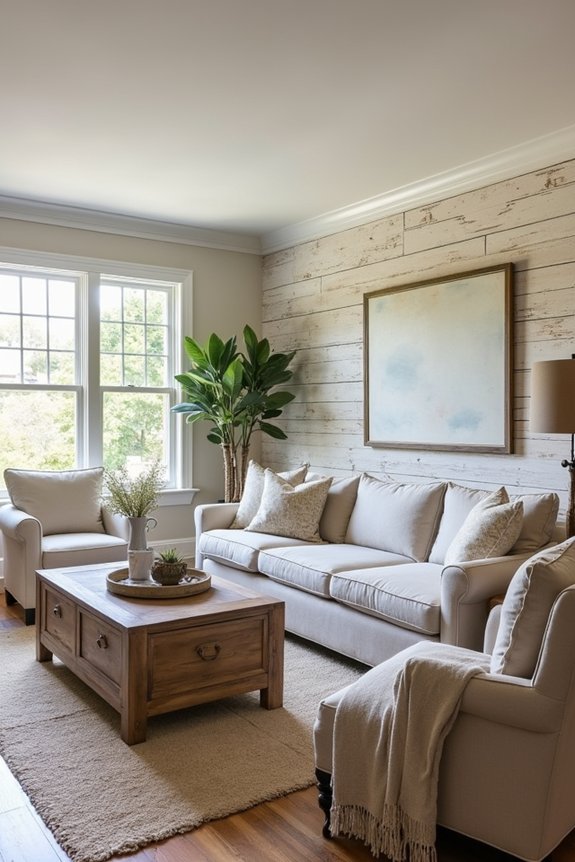
Once you’ve established your neutral foundation, vintage and reclaimed wood elements transform a space into something with real soul and history.
I love how a weathered barn door becomes a stunning focal point, or how old wooden beams add character to ceilings. You can find these treasures at antique shops, salvage yards, and online marketplaces.
Mix different wood tones—don’t worry about perfection. A reclaimed wood coffee table paired with vintage shelving creates warmth and authenticity.
These pieces tell stories and anchor your farmhouse style beautifully, making your home feel genuinely lived-in and inviting.
Keep Colors Soft and Muted
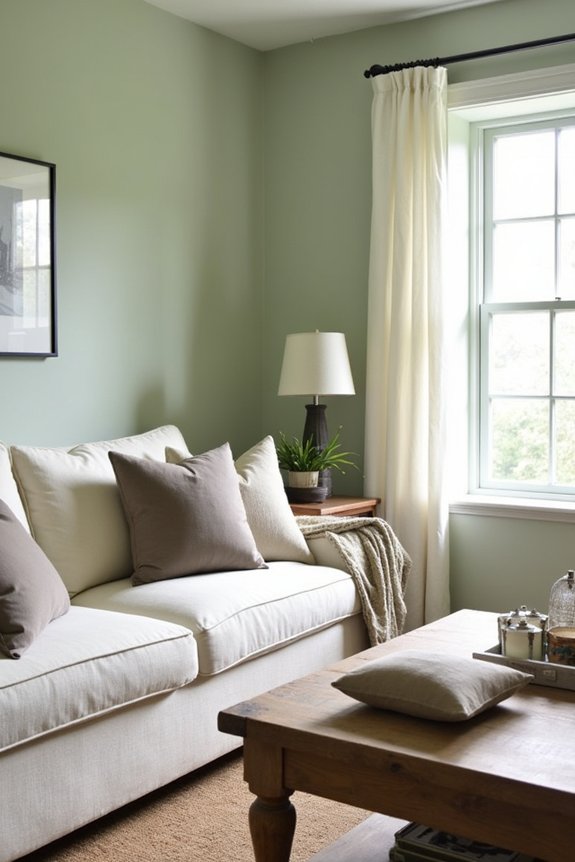
While those vintage pieces bring wonderful depth and character to your rooms, your color palette is what ties everything together and creates that calm, inviting feeling you’re after.
I’d recommend sticking with soft, muted tones like creamy whites, warm beiges, soft grays, and gentle sage greens. These colors work beautifully together and won’t compete with your reclaimed wood or vintage finds.
They’ll actually make those special pieces stand out more. When you choose a restful palette, your space naturally feels more welcoming and peaceful—exactly what farmhouse style is all about.
Select Functional Farmhouse Furniture
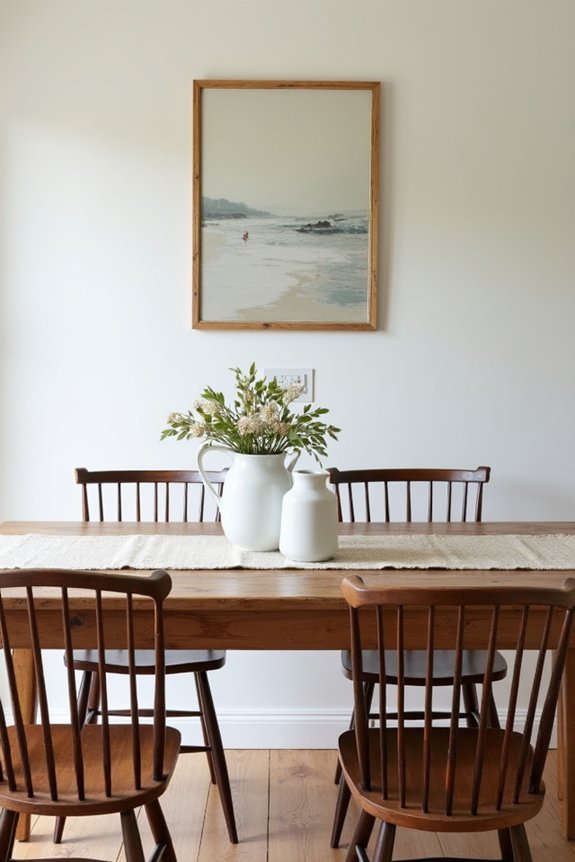
The beauty of farmhouse style lies in choosing pieces that aren’t just pretty to look at—they’ve got to function hard for your home too.
I recommend seeking solid wood tables with sturdy legs that’ll handle daily life, weathered kitchen islands offering storage and prep space, and comfortable seating that invites lingering conversations.
Look for pieces with character—distressed finishes, vintage hardware, and natural wood tones create authentic charm.
Prioritize items serving multiple purposes: ottomans with hidden storage, benches for entryways, open shelving displaying both beautiful and practical items.
This approach guarantees your farmhouse aesthetic feels lived-in and genuinely functional, not just decorative.
Layer Warm Textiles and Comfortable Seating
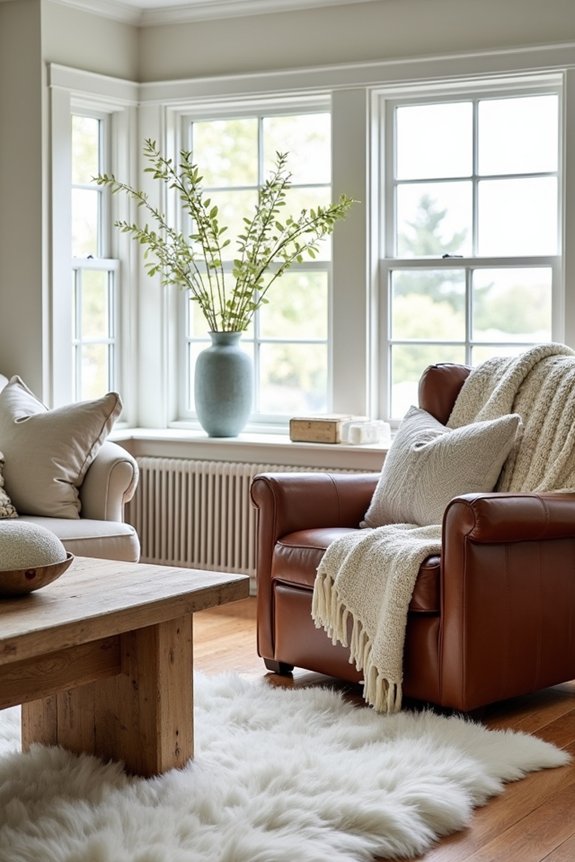
After you’ve established your furniture foundation, layering textiles transforms those pieces into inviting spaces where your family actually wants to spend time.
I love mixing different textures—soft throw blankets, chunky knit pillows, and natural linen cushions create depth and warmth.
Consider warm colors like cream, beige, and soft gray that feel calming and cohesive.
Add a cozy area rug to anchor your seating arrangement and define the room’s coziness.
These textiles don’t just look beautiful; they make every seat feel like your favorite spot.
That’s where farmhouse charm truly comes alive.
Showcase Collections on Open Shelves With Warm Lighting
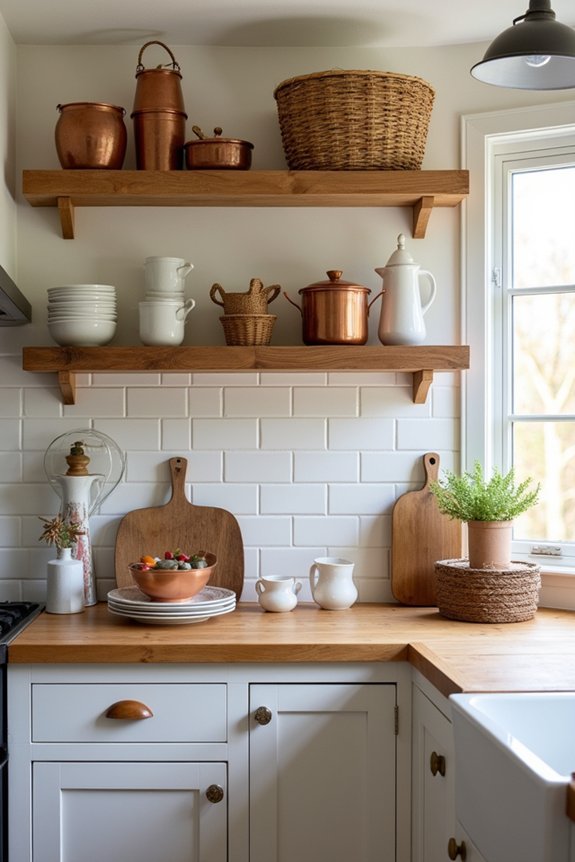
Now that you’ve wrapped your space in soft textures and comfortable seating, it’s time to add visual interest and functionality with open shelving.
I love how this styling technique transforms your home while keeping essentials accessible.
Consider these display strategies:
- Group items by color or size to create a cohesive, intentional look that draws the eye naturally across shelves.
- Layer in vintage pieces, books, and plants to build depth and tell your home’s unique story.
- Install warm Edison bulbs or string lights beneath shelves to cast a golden glow that enhances coziness.
This combination makes your collections feel like treasured displays rather than storage.
Frequently Asked Questions
How Can I Transition My Current Décor to Farmhouse Style Without a Complete Overhaul?
I’d swap out modern accessories for vintage finds—just as I discovered old mason jars at an estate sale—and introduce worn wood pieces, neutral textiles, and antique touches gradually. You’ll transform rooms without starting fresh.
What’s the Best Budget-Friendly Way to Source Authentic Vintage and Reclaimed Materials?
I’d scout local estate sales, Facebook Marketplace, and thrift stores first—they’re goldmines for authentic pieces. Reclaimed wood pallets from businesses cost nothing, and you’ll find incredible deals at architectural salvage yards.
How Do I Prevent a Farmhouse Aesthetic From Feeling Too Cluttered or Dated?
I keep my farmhouse style walking a tightrope between vintage charm and modern simplicity. I curate pieces intentionally, display only what I love, and let plenty of negative space breathe. I swap seasonal décor regularly to stay fresh.
Which Farmhouse Style Works Best for Smaller Spaces or Apartments?
I’d recommend modern farmhouse for apartments—it’s lighter and less ornate than traditional styles. Focus on clean lines, minimal décor, and neutral palettes. You’ll maximize space while keeping that cozy, welcoming farmhouse feel intact.
How Can I Incorporate Modern Conveniences While Maintaining an Authentic Farmhouse Look?
I’d blend sleek appliances with vintage styling—hide stainless steel behind shiplap panels, use reclaimed wood shelving for open storage, and choose neutral color palettes. You’ll maintain authenticity while enjoying today’s kitchen tech and smart home features effortlessly.