I can transform my home into a glowing sanctuary by arranging diyas in clusters of varying heights and pairing them with fresh flowers. A colorful rangoli in my entryway adds cultural significance, while layered string lights and lanterns create warm ambiance throughout. I’ll design a beautiful tablescape with metallic accents and marigolds, then set up a craft station where guests can decorate their own diyas and create keepsakes. To make my celebration truly memorable, I can plan an impressive dinner menu that blends traditional sweets with modern dessert displays—each element working together to create genuine festival magic.
Quick Tips
- Group diyas in varying heights and pair them with fresh flowers and metallic accents for visual warmth and intimacy.
- Create colorful rangoli designs in your entryway using vibrant powders, rice, or flower petals with traditional Diwali symbols.
- Layer warm-white string lights with colorful lanterns at varying heights to create an inviting, glowing ambiance throughout your home.
- Design a festive tablescape using gold runners, diyas, fresh marigolds, metallic chargers, and colorful napkins for elegant dining.
- Set up an interactive craft station with materials for guests to decorate diyas, create rangoli art, and make keepsakes.
Light Up Your Space With Diya Arrangements
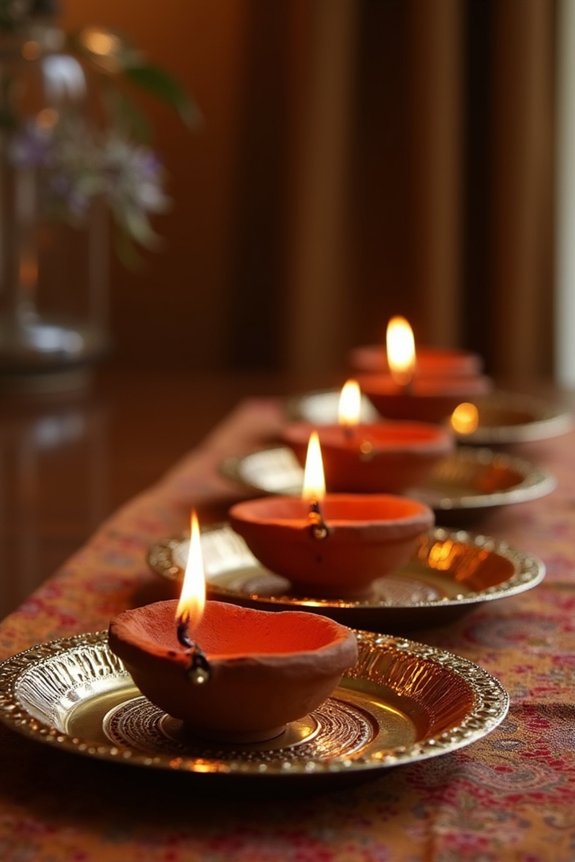
Diyas—those small, flame-holding vessels crafted from clay or metal—are the heart of Diwali celebrations, and they’re perfect for transforming your home into a warm, glowing sanctuary.
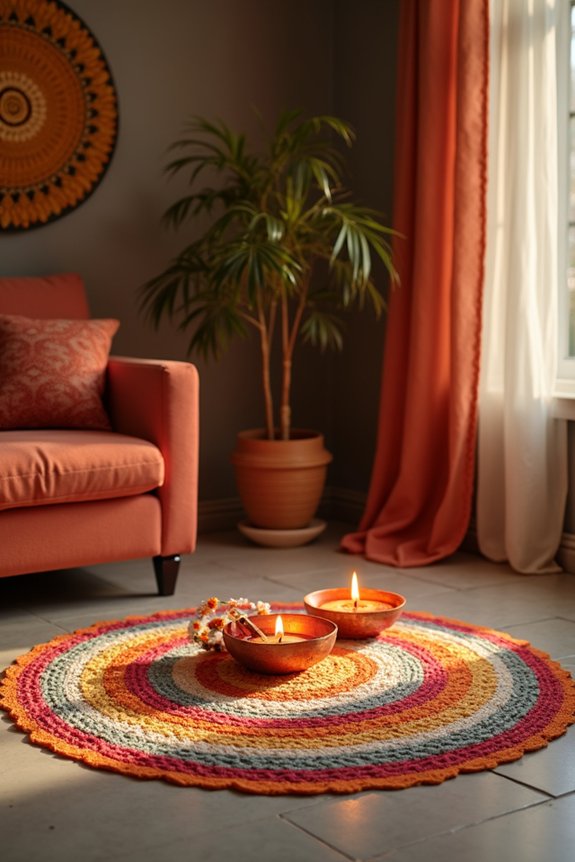
I love grouping diyas in clusters of varying heights along windowsills, mantels, and tables to create visual interest. You can arrange them in decorative patterns or simple lines, depending on your space.
Pairing diyas with fresh flowers, metallic accents, or colorful rangoli designs underneath amplifies their beauty. The flickering light creates an intimate atmosphere that makes your guests feel genuinely welcomed and celebrated.
Create a Colorful Rangoli Your Guests Will Remember
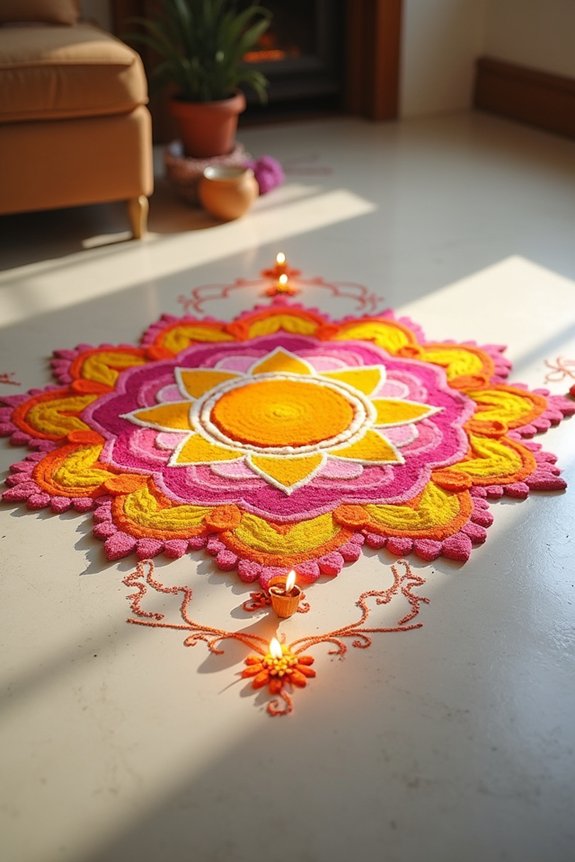
Rangoli—those intricate, colorful floor designs that you’ll see in homes throughout India during Diwali—offers you a stunning way to welcome guests and add artistic flair to your celebration.
You don’t need professional skills to create something beautiful. Here’s how I’d approach it:
- Choose a flat, clean entryway or living room space
- Gather colored powders, rice, or flower petals in vibrant hues
- Sketch a simple pattern first with chalk
Start with geometric shapes or traditional motifs.
Layer your colors gradually, building depth and dimension. Incorporating traditional Diwali symbols into your design can deepen the cultural significance of your celebration. Your guests will appreciate the thoughtfulness and artistry you’ve invested in honoring this meaningful festival.
Layer String Lights and Lanterns for Maximum Impact
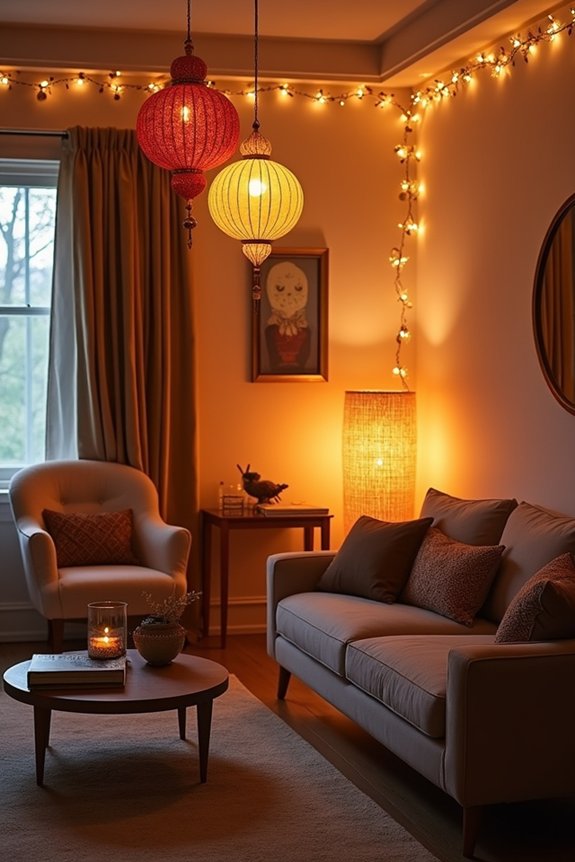
While rangoli draws the eye downward, strategic lighting lifts your celebration upward and outward, transforming your entire space into something magical.
I’d layer warm-white string lights overhead to create an inviting canopy, then add colorful lanterns at varying heights throughout your venue. This combination guides guests through your space while building visual interest.
Position lanterns near your rangoli to highlight that artwork, and drape lights along pathways or around doorways. Mix traditional paper lanterns with modern string lights for a balanced aesthetic.
The interplay of warm and colorful glows creates depth and festive energy that’ll enchant everyone attending your Diwali celebration.
Design Your Diwali Tablescape
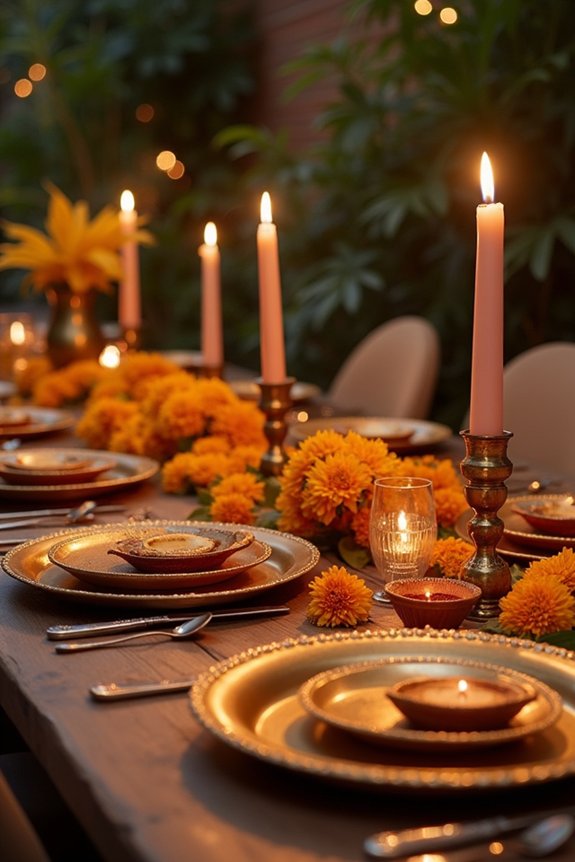
Now that you’ve set the stage with glowing lights and beautiful floor art, it’s time to bring that same magic to your table.
I’d create a tablescape that celebrates Diwali’s warmth and richness:
- Layer rich fabrics like gold or deep jewel-toned runners beneath your place settings.
- Arrange small diyas and candles down the table’s center, spacing them for safe conversation flow.
- Add fresh flowers such as marigolds or roses in small bunches between candles.
Use metallic chargers, colorful napkins, and meaningful place cards.
Mix traditional elements with your personal style, creating a table that feels both festive and intimate for your guests.
Mix Traditional Sweets With Modern Dessert Displays
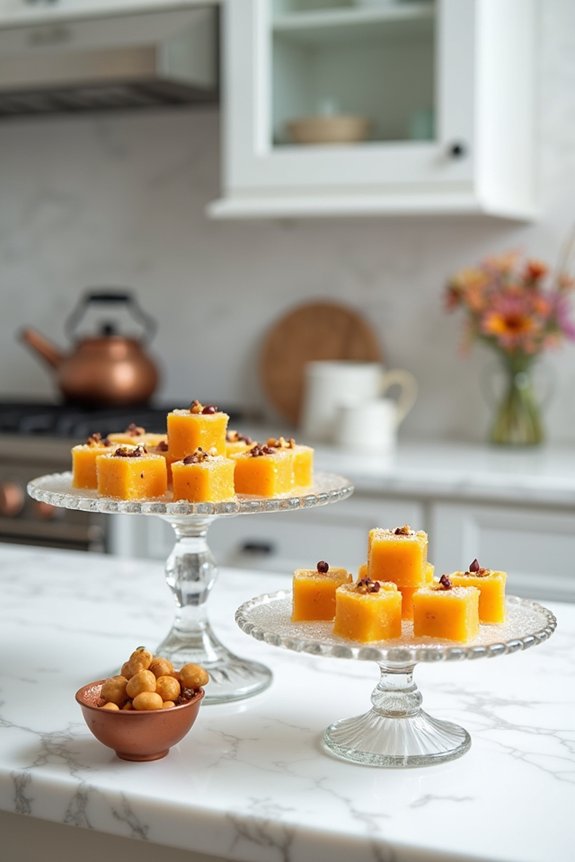
No Diwali celebration feels complete without something sweet, and you’ve got a wonderful opportunity to honor tradition while creating an Instagram-worthy dessert display that’ll have your guests talking long after the festivities end.
I recommend layering traditional treats like gulab jamun and barfi alongside modern options such as chocolate truffles or macarons.
Display these goodies on tiered cake stands, wooden boards, or glass pedestals at varying heights.
Add fresh flowers, gold leaf accents, and small candles between treats for visual interest.
This blend respects cultural heritage while giving your dessert table contemporary style that feels fresh and inviting.
Consider pairing your dessert spread with Diwali games to keep guests entertained throughout your celebration.
Set Up a DIY Diwali Craft Station for Guests
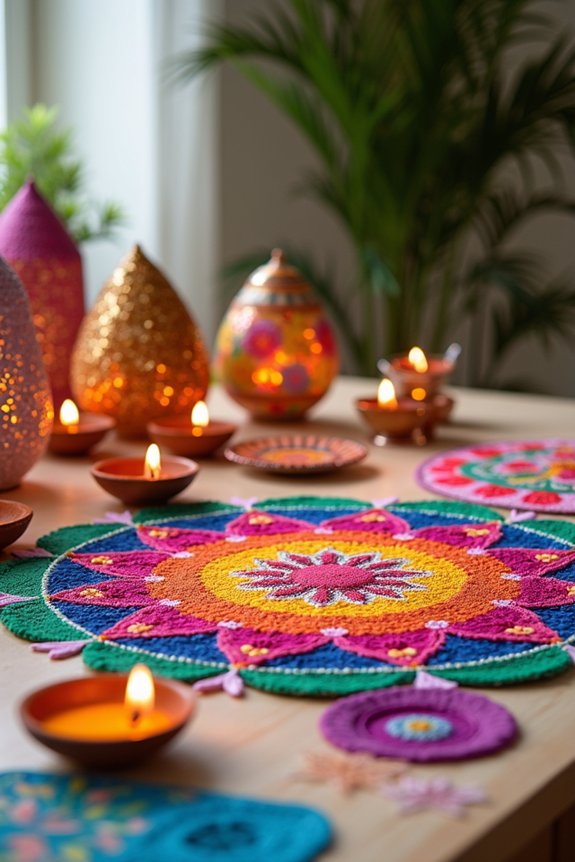
One of the best ways to keep your guests entertained and create lasting memories is by setting up a DIY craft station where they can make their own Diwali decorations and keepsakes.
I’d suggest providing these supplies:
- Colorful paper, markers, and scissors for creating personalized greeting cards and rangoli designs.
- String lights, beads, and metallic paint for decorating small clay diyas or lanterns.
- Tissue paper and glue for assembling festive garlands and wall hangings.
Your guests will love expressing their creativity while taking home handmade treasures.
This interactive experience transforms your celebration into something truly special, letting everyone participate in the festive spirit together.
Plan a Diwali Dinner Party Menu That Impresses
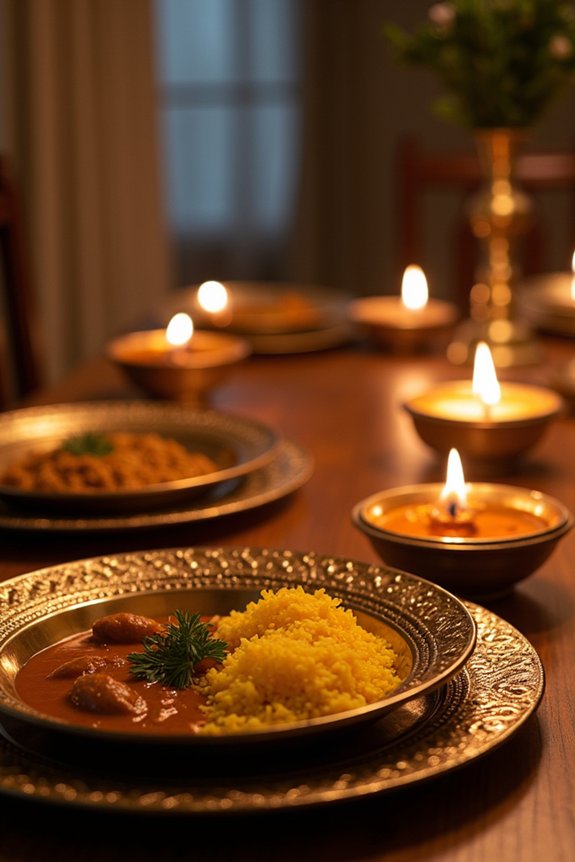
After your guests finish creating beautiful keepsakes at the craft station, they’ll work up an appetite—and that’s where a thoughtfully planned menu comes in. I’d suggest starting with samosas or pakoras for appetizers, then moving into a main course featuring paneer tikka, chicken curry, or vegetable biryani.
These dishes showcase Diwali’s rich flavors while accommodating various preferences. Include fragrant basmati rice, warm naan bread, and cooling raita on the side.
For dessert, gulab jamun or kheer will delight your guests. Don’t forget mango lassi or chai for beverages. This balanced menu creates an authentic, impressive dining experience. Consider complementing your menu with festive Diwali decorations to enhance the celebratory atmosphere throughout your dinner party.
Frequently Asked Questions
What’s the Best Timeline for Planning a Diwali Celebration From Start to Finish?
I’d recommend starting eight weeks before Diwali. Begin with your guest list and theme, then tackle decorations and menu planning at the six-week mark. Two weeks out, I finalize details and prep what I can ahead.
How Can I Incorporate Diwali Traditions if I’m New to Celebrating the Festival?
Like opening a beautifully wrapped gift, I’ll guide you through essential Diwali traditions. Start with oil lamps, string lights, and rangoli designs. Incorporate a prayer ritual, prepare traditional sweets, and exchange gifts with loved ones to honor the festival’s spiritual heart.
What’s an Appropriate Budget for Hosting a Diwali Party for Twenty Guests?
I’d suggest budgeting $300–$500 for twenty guests, depending on your menu choices. You’ll spend most on food and drinks, then allocate funds for décor, lighting, and small favors that’ll make your celebration memorable.
Where Can I Source Authentic Diwali Decorations and Supplies in My Local Area?
I’ve discovered that hunting for authentic Diwali supplies is like treasure hunting—you’ll find gems in unexpected places. Check local Indian grocery stores, temple gift shops, ethnic markets, and online retailers like Amazon or specialty sites. They’re your gold.
How Do I Make My Diwali Celebration Inclusive for Guests Unfamiliar With the Festival?
I’d suggest creating a welcome card explaining Diwali’s significance, inviting guests to participate in lighting diyas together, and serving traditional foods with descriptions. You’ll foster genuine connection and curiosity naturally.