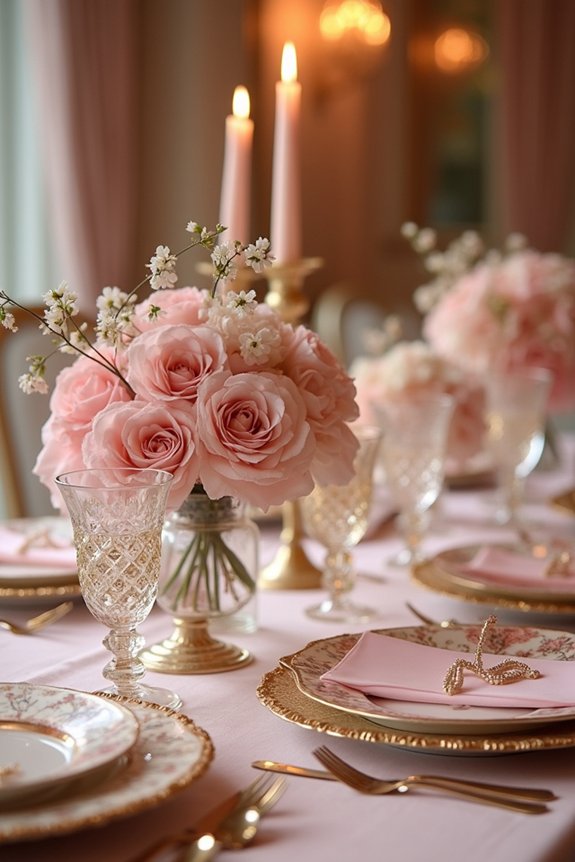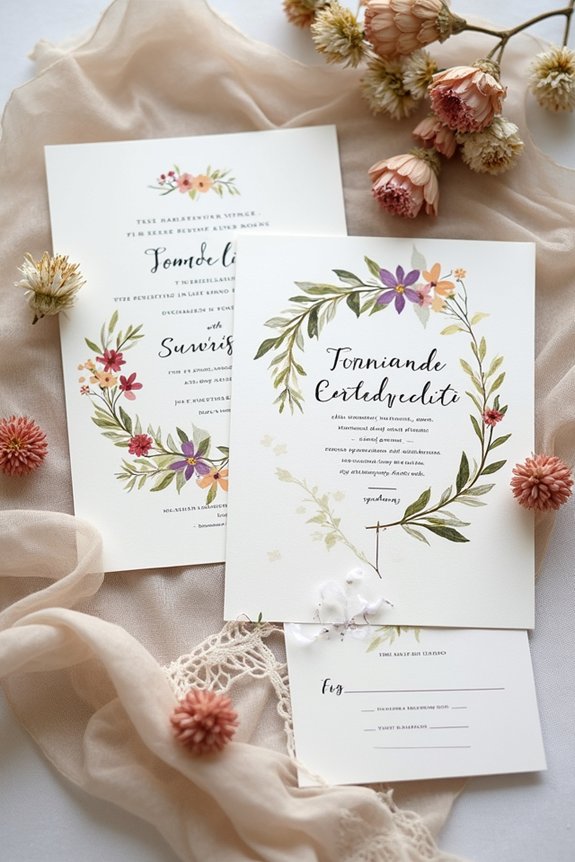
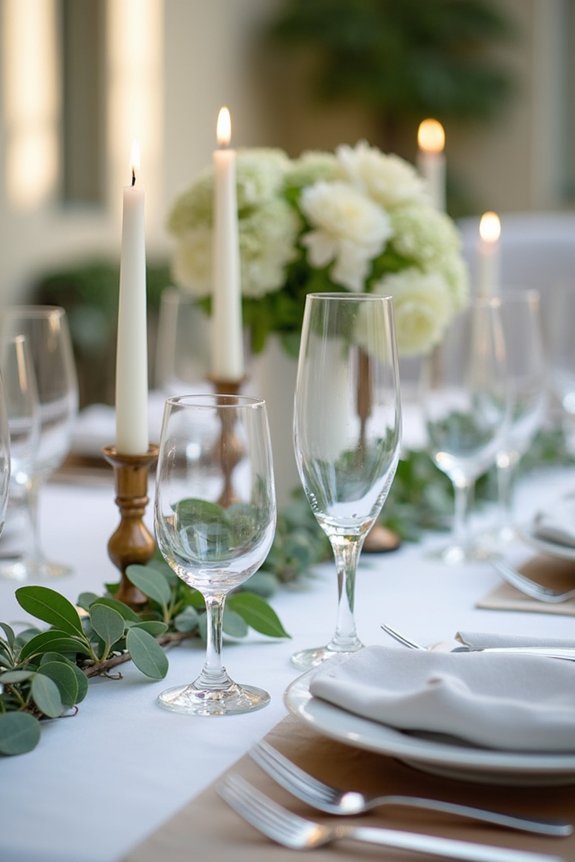
I’ll help you create an elegant tablescape by focusing on three essential elements. Start with a cohesive color palette and quality linens that set your foundation. Next, layer centerpieces at varying heights, mixing soft flowers with sculptural elements for visual interest. Finally, embrace negative space by spacing décor strategically and leaving plate areas open—restraint actually creates sophistication. These foundational choices work together to transform your table into an admirable focal point, and discovering how to balance each element reveals the true art behind tablescape design.
Quick Tips
- Color and Texture Coordination – Select two to three coordinating colors and layer textures with smooth bases and patterned elements for visual harmony.
- Strategic Centerpiece Placement – Combine varying heights with flowers, branches, and sculptural elements while spacing them apart to avoid clutter.
- Thoughtful Use of Negative Space – Leave plate areas open and embrace simplicity to allow quality pieces to shine without overwhelming the table.
- Quality Over Quantity – Curate intentionally paired elements that complement each other rather than compete for attention on the tablescape.
- Visual Balance and Restraint – Maintain sophistication through strategic placement of décor that enhances the dining experience without excessive ornamentation.
Set Your Elegant Foundation With Color and Linens
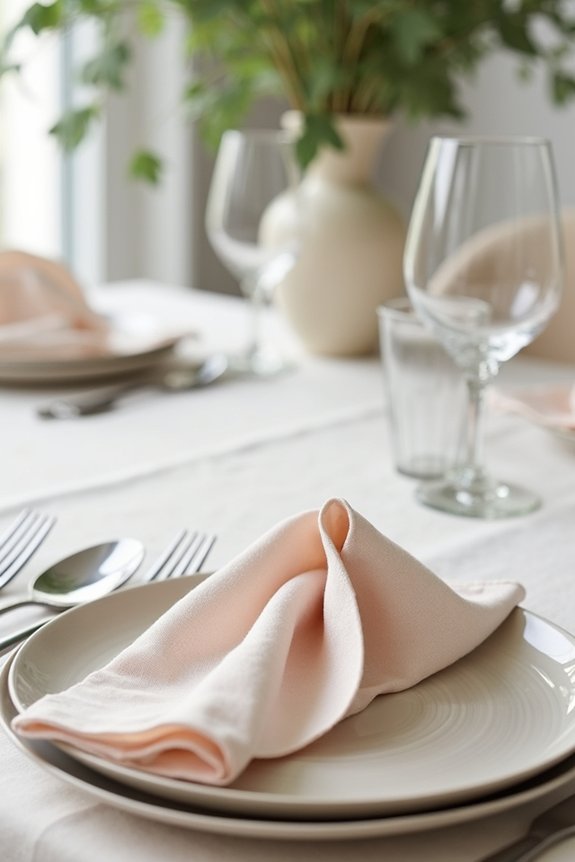
When you’re creating a tablescape that’ll make your guests pause and admire, everything starts with the foundation you choose—your color palette and linens.
I find that selecting two to three coordinating colors creates visual harmony without feeling cluttered. Your tablecloth or runner sets the tone; linen or cotton blends offer elegance and durability.
Layer textures by pairing a smooth base with a patterned runner or lace overlay. Consider your lighting—candlelight flatters warm neutrals, while jewel tones shimmer under soft white bulbs.
Thoughtfully chosen tea party decorations can enhance these foundational elements and tie your entire design concept together. These foundational choices guide every other decoration you’ll add, ensuring your tablescape feels intentional and beautifully cohesive.
Layer Centerpieces and Florals for Drama
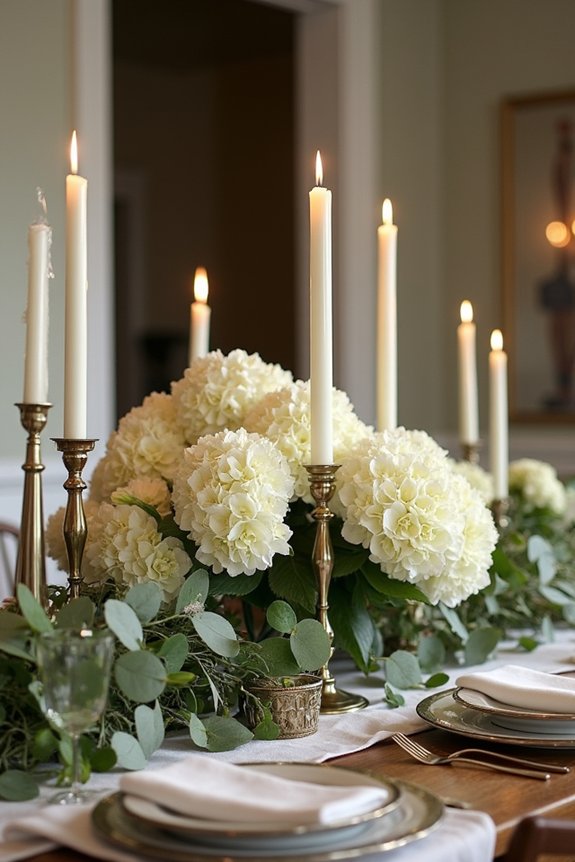
Now that your linens and colors set the stage, it’s time to build visual interest through layered centerpieces and florals—this is where your tablescape truly comes alive.
I recommend combining varying heights to draw the eye upward and create dimension. Pair tall branches or candles with shorter blooms and greenery for balance.
Mix textures by blending soft flowers with sculptural elements like driftwood or metallic accents. Don’t shy away from going lush—abundance feels luxurious.
Choose blooms that complement your color palette, and remember that greenery alone can deliver impact when arranged thoughtfully.
For a baby shower, consider incorporating soft pastel flowers that enhance the delicate and celebratory atmosphere of the event.
Know When to Stop: Using Negative Space Like a Pro
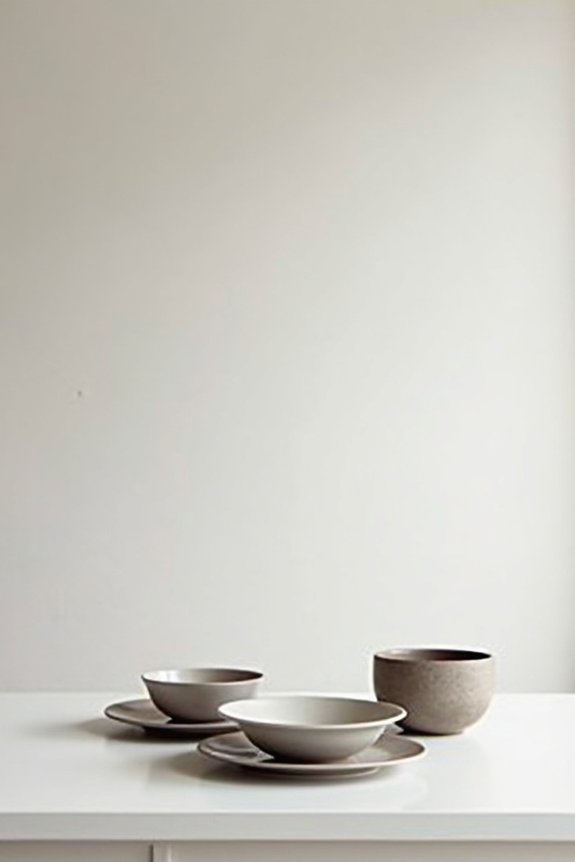
As tempting as it’s to fill every inch of your table with beautiful things, I’ve learned that restraint is actually what makes a tablescape feel sophisticated and intentional.
Negative space—those breathing room areas—creates visual balance and prevents your table from feeling cluttered or overwhelming.
Consider these strategies:
- Leave plate areas open so each place setting stands out
- Space centerpieces apart rather than clustering them densely
- Use empty spots strategically between décor elements to draw the eye
When you embrace simplicity, you’re actually allowing your most beautiful pieces to shine. Investing in quality dinner party decorations that complement rather than compete with your tablescape will enhance this sophisticated approach.
Your guests will appreciate the thoughtful curation, and your table will feel elegant, not exhausting.
Frequently Asked Questions
How Do I Choose the Right Dinnerware and Glassware for an Elegant Tablescape?
I’d recommend selecting dinnerware in neutral tones or classic patterns that complement your color scheme, then choose glassware that coordinates without overwhelming the table. Match your overall aesthetic—modern, traditional, or eclectic.
What’s the Best Way to Fold Napkins for a Formal Dinner Setting?
I’ve found the classic French fold works beautifully for formal dinners. Fold your napkin in half, then quarters, and place it point-side up on the plate. It’s elegant, simple, and frames your dinnerware perfectly.
Should I Use Place Cards, and How Do I Design Them Elegantly?
I’d absolutely recommend place cards—they’re elegant and guide your guests to their seats. I design mine with calligraphy, metallic pens, or watercolor accents on cardstock that matches your table’s color scheme.
How Do I Incorporate Lighting to Enhance My Tablescape’s Ambiance?
“You can’t have too much of a good thing”—so layer your lighting! I use candles for warmth, string lights for romance, and subtle uplighting behind centerpieces. Dimmed overhead lights let candlelight shine.
What’s the Proper Etiquette for Flatware Placement at an Elegant Table?
I’ll guide you through the classic rule: place forks on the left, knives and spoons on the right with knife blades facing inward. Work from the outside in as courses progress. Your guests’ll follow naturally.