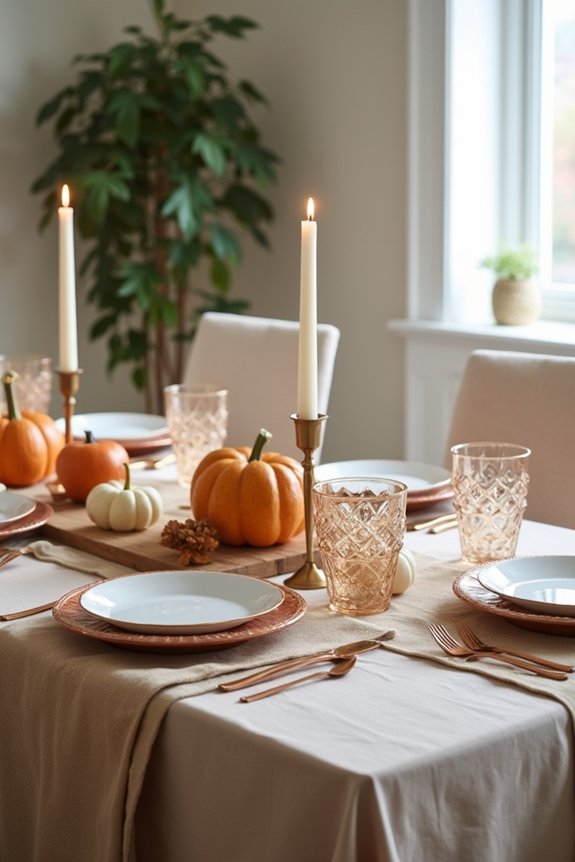
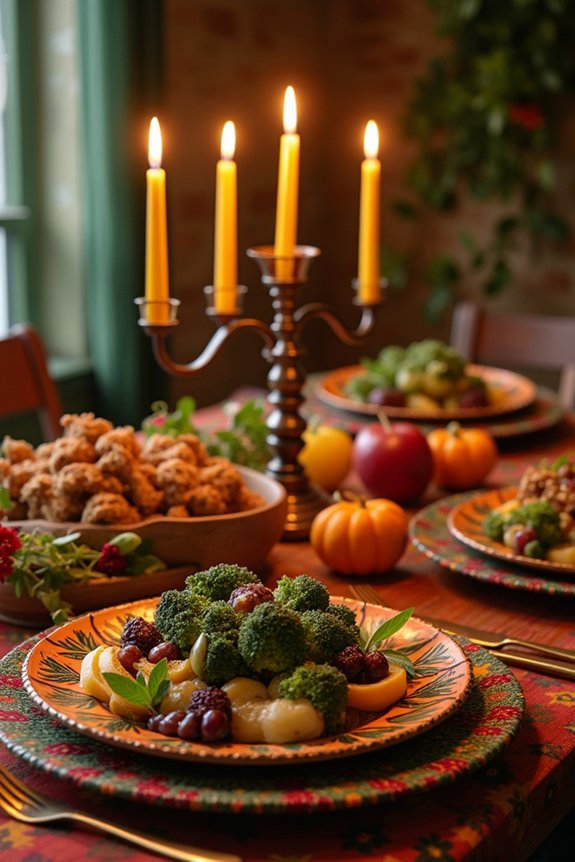
I’d love to help you celebrate Kwanzaa with dishes that honor African American heritage and bring your family closer together. Collard greens symbolize prosperity with their deep green color representing hope. Black-eyed peas represent coins and abundance, while jollof rice‘s one-pot preparation fosters connection as everyone gathers around. Cornbread adds warmth and tradition, and a main protein like herb-roasted chicken or glazed ham sets the perfect tone. Each dish carries meaning that nourishes both body and spirit, and there’s so much more to discover about these flavorful traditions.
Quick Tips
- Collard greens symbolize prosperity and abundance while honoring African American heritage and cultural roots.
- Black-eyed peas represent coins and prosperity, offering protein-rich versatility for traditional Kwanzaa meals.
- Jollof rice fosters unity as families gather around one pot sharing West African flavors.
- Cornbread complements soul food dishes, offering warmth and tradition to celebrate cultural connections.
- Herb-roasted chicken or glazed ham serve as flavorful protein centerpieces for Kwanzaa celebrations.
Collard Greens: Why This Vegetable Anchors Kwanzaa Tables
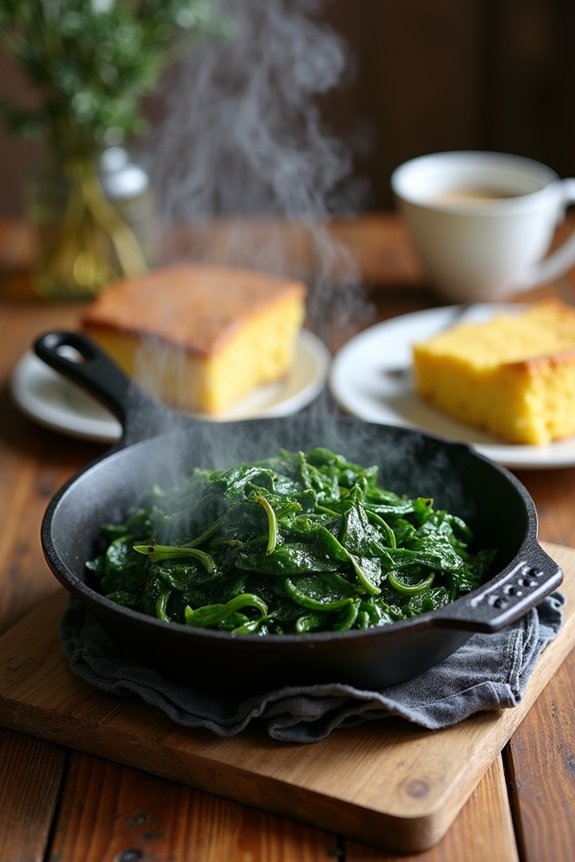
Collard greens aren’t just another side dish on a Kwanzaa table—they’re a symbol of prosperity and abundance that connects you to generations of tradition.
I find that their deep green color represents hope and renewal, making them perfect for celebrating this meaningful week.
You’ll want to prepare them with care, simmering them slowly with onions, garlic, and a bit of smoked seasoning to develop rich flavors. Their tender texture and savory taste complement other traditional dishes beautifully.
When you serve collard greens, you’re honoring African American heritage while creating a welcoming, nourishing meal that brings everyone together.
Black-Eyed Peas: Simple, Satisfying, and Full of Meaning
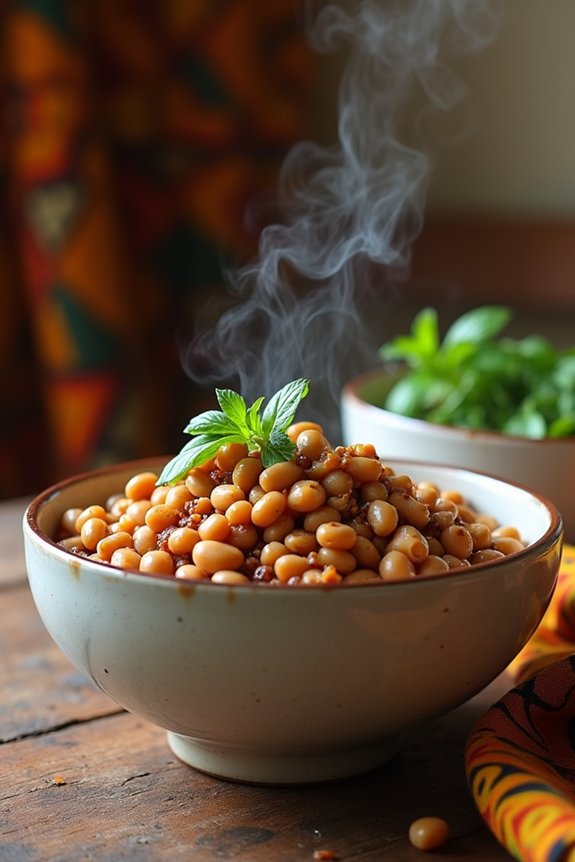
Tradition and good fortune come together in a single humble legume: the black-eyed pea. I find myself drawn to this ingredient because it carries such meaningful symbolism while remaining incredibly versatile for your table.
Why Black-Eyed Peas Matter:
- Represent coins and prosperity in Kwanzaa tradition
- Offer protein-rich nutrition for satisfying meals
- Pair beautifully with collard greens and cornbread
- Absorb flavors from spices and seasonings wonderfully
- Work in both traditional and modern recipes
You can simmer them with onions and garlic, or create a vibrant salad.
Their creamy texture and mild flavor make them welcoming for all your guests, ensuring everyone feels nourished and celebrated during your Kwanzaa gathering.
Jollof Rice: West African Flavors That Bring People Together
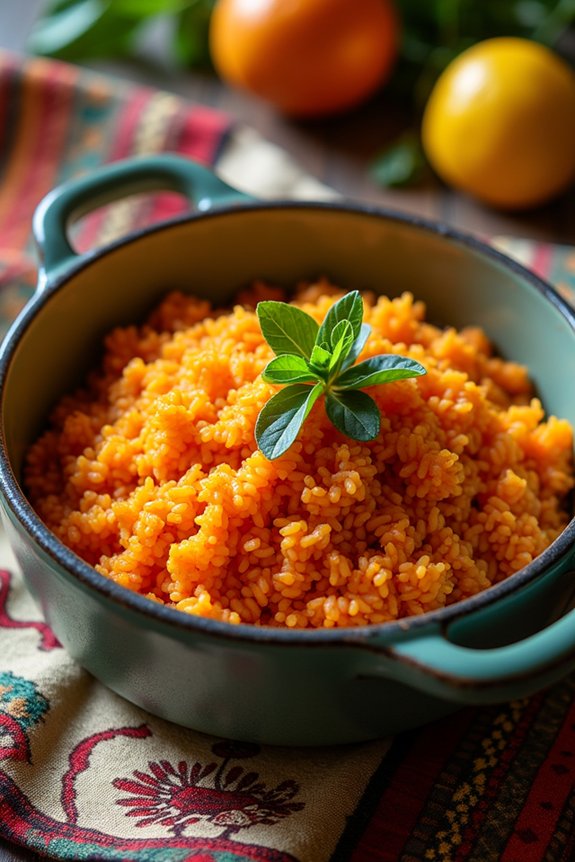
When you’re looking for a dish that’ll make your Kwanzaa table feel warm, vibrant, and connected to West African heritage, jollof rice is the answer you’ve been searching for.
This one-pot wonder combines rice, tomatoes, peppers, and spices into something truly special. The beauty of jollof rice lies in how it brings people together—everyone gathers around the same pot, sharing flavors and stories.
I find that preparing this dish creates natural conversation and connection. You’ll love how the savory, slightly smoky taste celebrates your cultural roots while feeding both body and spirit beautifully.
Cornbread: The Side Dish Your Table Needs
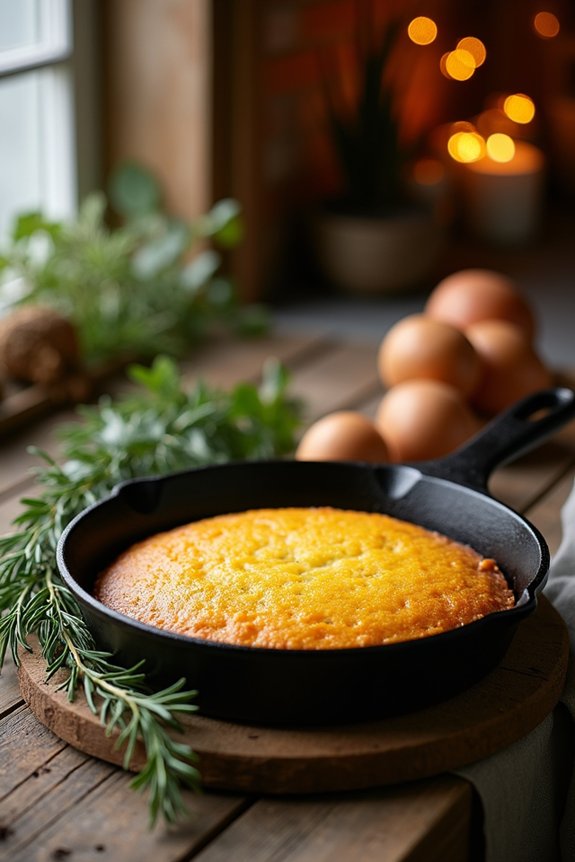
No Kwanzaa celebration feels complete without cornbread sitting proudly beside your main dishes, and there’s a reason why. This golden side dish brings warmth and tradition to your table, complementing rich flavors beautifully.
I find cornbread appeals to everyone, making it an ideal addition to your gathering.
Consider these cornbread options:
- Classic buttermilk cornbread with honey butter
- Jalapeño and cheddar for subtle heat
- Sweet corn kernels for texture
- Skillet cornbread with crispy edges
- Cornbread dressing as a hearty alternative
You’ll appreciate how cornbread pairs with collard greens, black-eyed peas, and soul food favorites.
Bake it fresh the morning of your celebration, and watch your guests reach for seconds.
Okra and Tomatoes: Growing the Vegetables Your Ancestors Grew
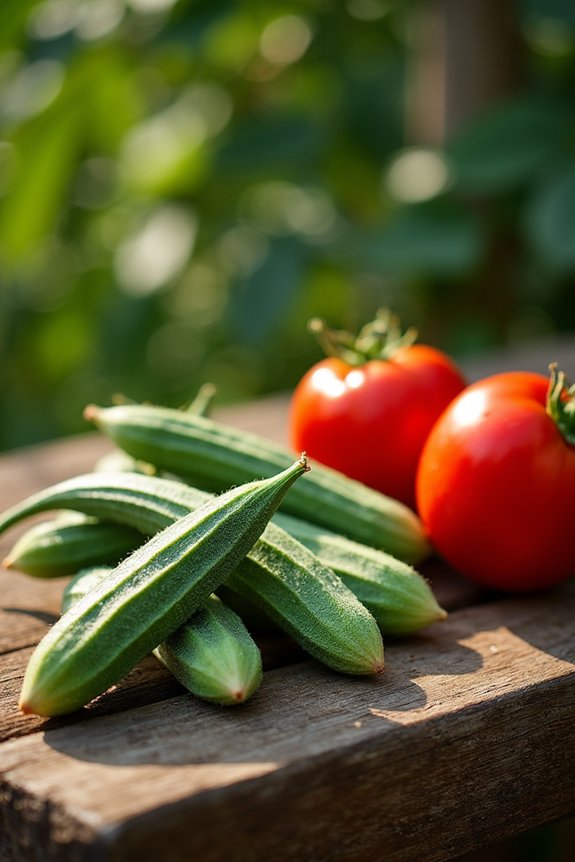
While cornbread provides comfort on your Kwanzaa table, the vegetables alongside it carry stories just as meaningful.
Growing okra and tomatoes connects me to the resilience of my ancestors who cultivated these crops despite hardship. I can plant okra seeds in warm soil, watching them flourish into tender pods perfect for traditional dishes.
Tomatoes thrive alongside them, their vibrant red color symbolizing the strength within our community. You don’t need extensive gardening experience—these hardy vegetables forgive beginners.
Even a small garden plot or containers on your patio work beautifully. This year, I’m creating that living connection between past and present.
Gumbo: How One Pot Brings People and Stories Together
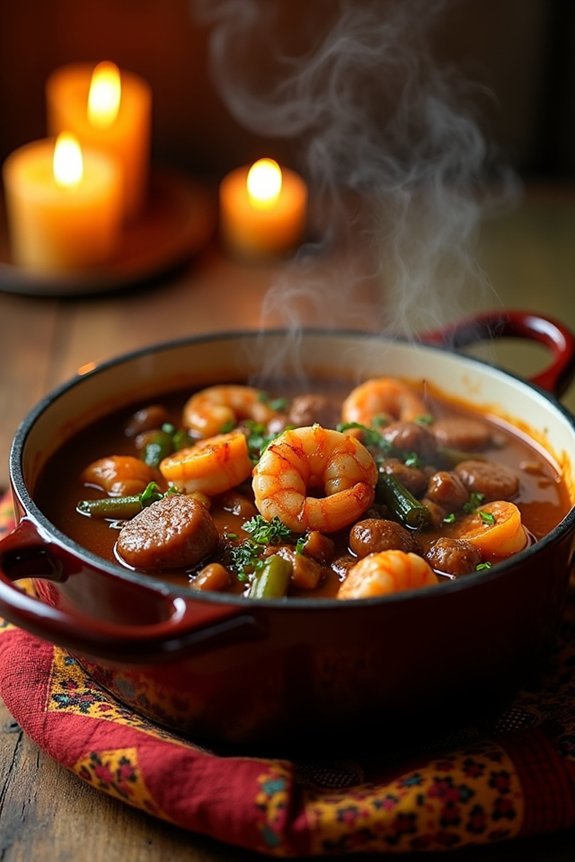
A single pot of gumbo holds generations of wisdom, creativity, and love—and that’s exactly what makes it perfect for your Kwanzaa celebration.
This dish brings everyone together, stirring stories and traditions into every spoonful. I’d encourage you to embrace gumbo’s flexibility—it adapts to what you have and who you’re feeding.
- Builds connection through shared cooking and eating
- Honors African and Creole heritage authentically
- Feeds crowds without complicated techniques
- Improves with time as flavors deepen
- Invites customization based on family preferences
Your guests will taste the care you’ve stirred into this meaningful meal.
Fried Plantains: Sweet and Savory in Every Bite
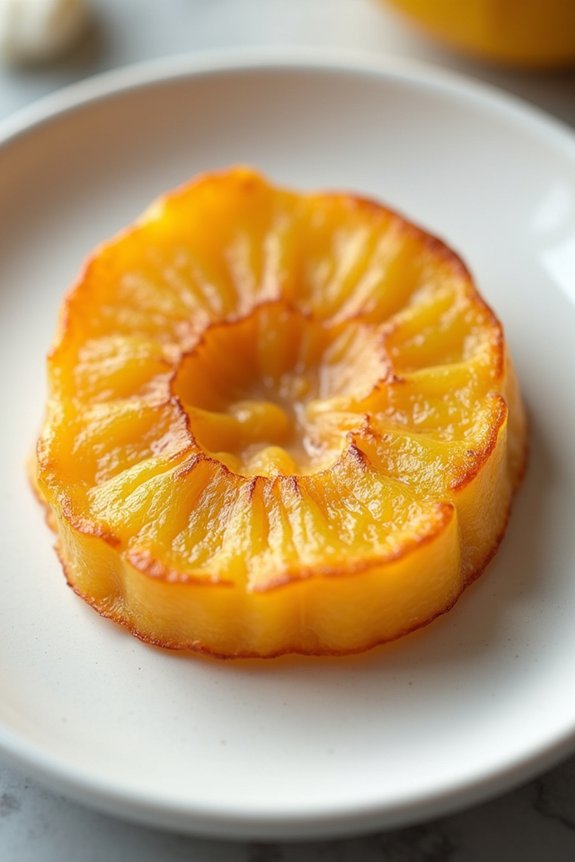
Fried plantains bridge the gap between sweet and savory in a way that feels both comforting and exciting, making them an ideal addition to your Kwanzaa table.
I find them wonderfully versatile—you can serve them as a side dish or dessert depending on ripeness and seasoning.
Green plantains offer a savory, potato-like texture, while yellow ones bring natural sweetness.
Simply slice them lengthwise, fry until golden and crispy, then season with salt, cinnamon, or a touch of honey.
They’re straightforward to prepare, impressive to present, and your guests will absolutely love them.
Candied Yams: The Holiday Dish With Hidden History
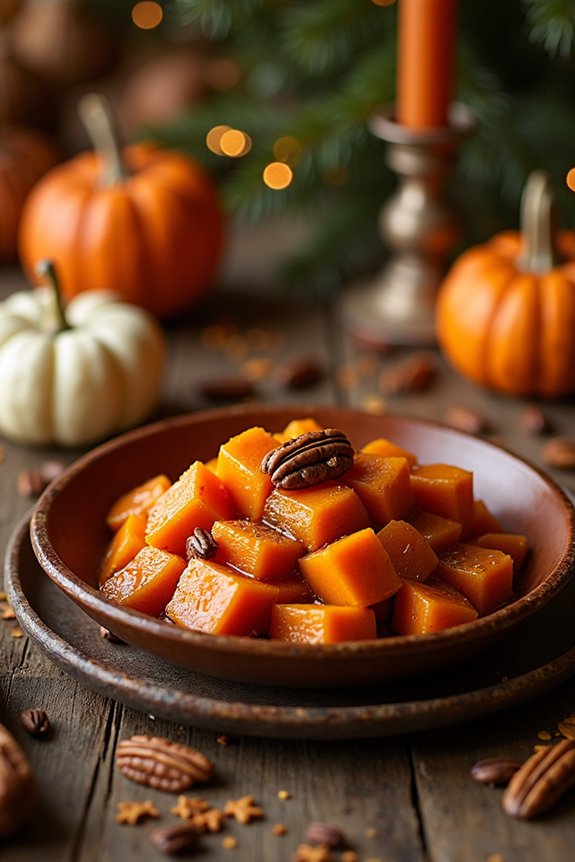
Candied yams hold a special place on holiday tables, and they deserve a spot on your Kwanzaa celebration too.
This beloved dish carries deep roots in African American history and tradition. The combination of sweet potatoes, brown sugar, and warm spices creates comfort on your plate.
I love how this dish brings families together while honoring cultural heritage.
- Roast yams until tender, then layer with butter and cinnamon
- Use pure maple syrup for authentic, rich flavor
- Add nutmeg and ginger for warmth and depth
- Top with pecans or marshmallows for texture
- Prepare ahead to simplify your celebration day
Sweet Potato Pie: Dessert That Tells a Story
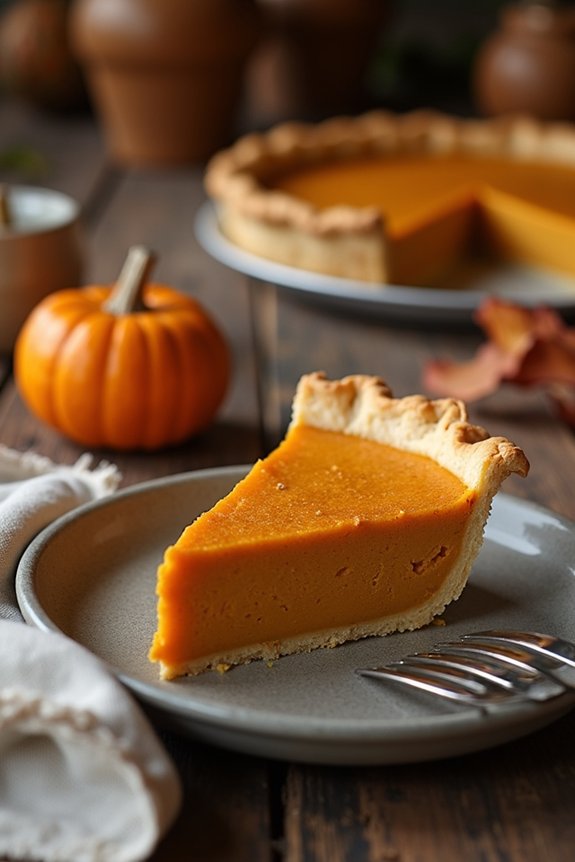
Sweet potato pie represents far more than just a dessert—it’s a vessel of ancestral memory and resilience that’s graced tables through generations.
This beloved treat carries stories of strength, survival, and cultural pride through every slice. When I serve sweet potato pie at my Kwanzaa celebration, I’m honoring the resourcefulness of those who transformed humble ingredients into something extraordinary.
The creamy filling, warm spices, and buttery crust create comfort that nourishes both body and spirit. I find this dessert connects me directly to my heritage, making it an essential centerpiece for celebrating unity and togetherness. Whether you’re planning a 70th birthday celebration or a Kwanzaa gathering, meaningful desserts like this one create lasting memories with those you cherish most.
The Main Protein: Ham or Herb-Roasted Chicken
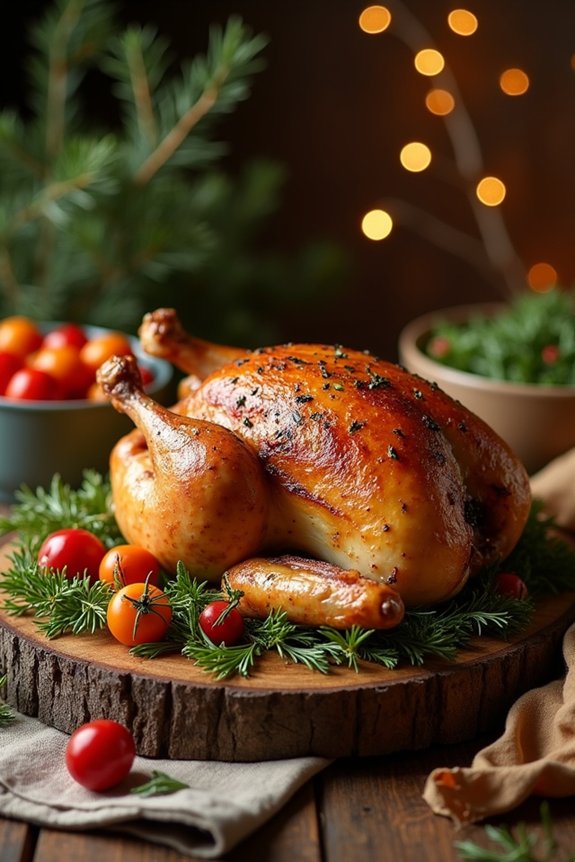
When you’re planning your Kwanzaa menu, choosing your main protein sets the tone for the entire meal, and you’ll want something that feels both celebratory and comforting.
I’d suggest considering these two standout options:
- Herb-roasted chicken with garlic, thyme, and rosemary for a lighter, aromatic choice
- Glazed ham with brown sugar and spices for rich, festive flavors
- Marinating proteins overnight to deepen flavors and tenderness
- Slow-roasting methods that keep meat juicy and allow aromas to fill your home
- Pairing proteins with traditional sides like collard greens and cornbread
Either option honors Kwanzaa’s spirit while creating a meal your guests will remember.
Frequently Asked Questions
When Should I Start Preparing Dishes for a Kwanzaa Celebration Dinner?
I’d say you’ll want to start prepping at least two days before—think of it as building blocks for your celebration. This gives you time to marinate proteins, prep vegetables, and handle those time-intensive dishes without feeling rushed.
How Can I Adapt Traditional Kwanzaa Recipes for Dietary Restrictions and Allergies?
I’d recommend swapping ingredients strategically—use gluten-free flour for traditional dishes, coconut milk instead of dairy, and plant-based proteins for meat. Always inform guests beforehand so you’re prepared with suitable alternatives.
What Beverages Pair Well With Traditional Kwanzaa Foods and Meals?
I’d pair traditional Kwanzaa dishes with ginger beer, hibiscus tea, or spiced wine for authentic flavor. Fresh juices like orange or pomegranate complement rich stews beautifully, while sparkling cider offers a festive non-alcoholic option.
Can I Make Kwanzaa Dishes Ahead of Time for Easier Day-Of Hosting?
I’m delighted to share that most dishes benefit from advance preparation. You can prepare grains, braise meats, and assemble casseroles days ahead. I simply reheat everything, which lets me focus on hosting rather than cooking.
Where Do I Source Authentic West African Ingredients for Traditional Recipes?
I’d recommend checking specialty grocery stores in your area, browsing online retailers like Amazon or ethnic markets, and exploring local African markets. You’ll find authentic ingredients like plantains, yams, and traditional spices there.